
Where to Go
Elk, bears and the trash rule nobody tells you about in Estes Park
How far to stay from elk, bears, moose and lions around Estes Park, plus the trash and bird feeder rules that apply to homes, rentals and businesses.
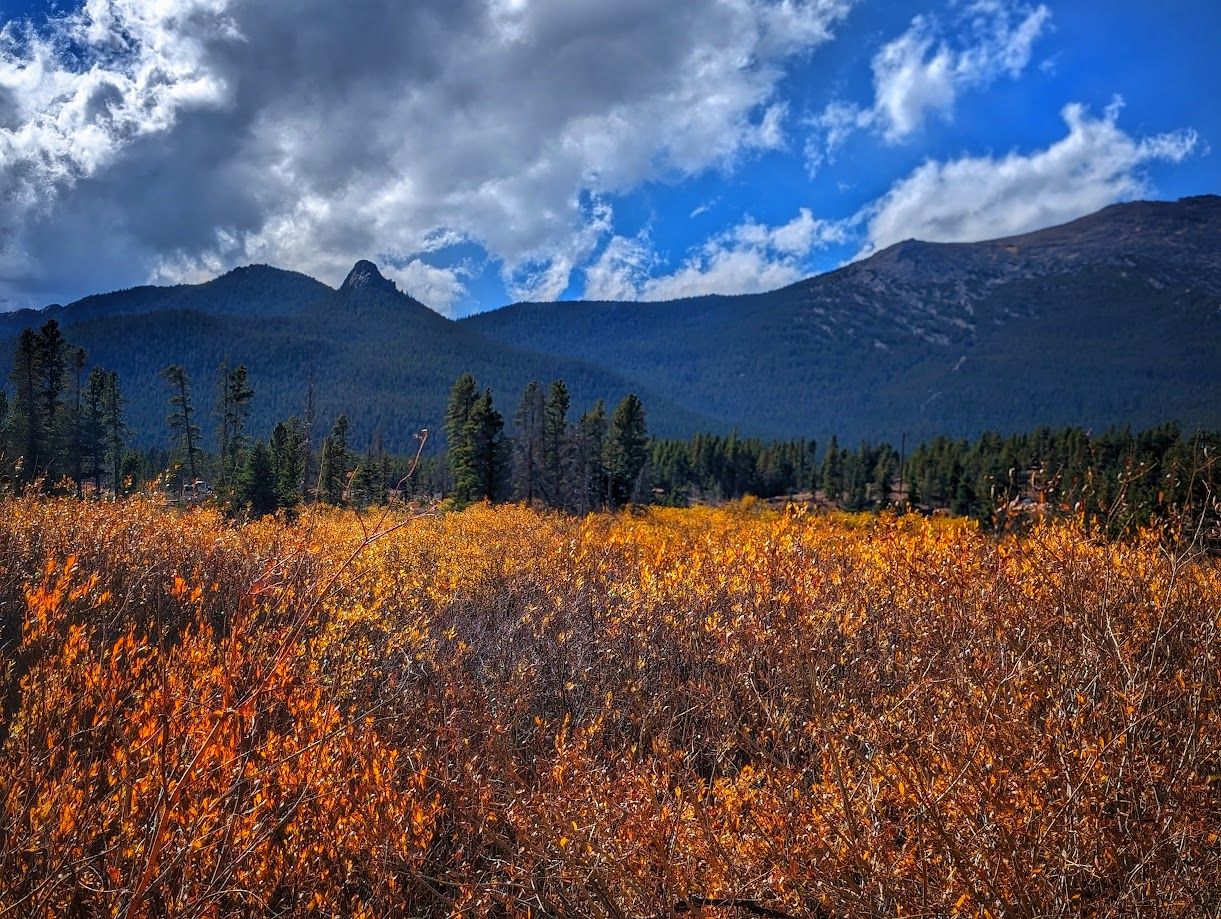
I’ve lived here about seven years, and the question I get most from visitors isn’t where to eat. It’s “is that elk going to charge me?” The second most common is nothing, because they don’t know to ask about the trash. Let’s cover both.
How close is too close to an elk?
Rocky Mountain National Park asks you to stay at least 75 feet from elk, which the Park describes as about two bus lengths. That’s farther than it sounds when a cow is grazing next to a parking lot and you’ve got a phone in your hand.
The Park’s own test is a good one. Hold your arm out, thumb up, close one eye. If the animal isn’t completely hidden behind your thumb, back up. The Town of Estes Park gives the same advice in plainer terms: if an elk is watching you intently or looks jumpy, you’re too close. Go by the elk’s face, not by the tape measure.
Elk in town are the ones that get people hurt, because they look tame. They aren’t. Keep dogs leashed and never let them chase anything. Don’t stop in the middle of Elkhorn or Highway 34 to watch, either. Pull off, park, and walk.
Rut season and calving season
Two times of year deserve extra distance.
Calving runs from late May through June. Cows hide calves in grass and brush, and the Park warns that cows are extremely protective. You can walk right past a calf you never saw. If a cow is staring at you and her ears are pinned, she’s telling you something. Listen.
The rut is early fall, when bulls come down into the meadows and compete for cows. This is the season everyone wants to see, and it’s worth it. Go early or go at dusk and bring binoculars. The Park closes certain meadows to foot traffic in the evening and early morning during the rut, including Horseshoe Park, Moraine Park, Upper Beaver Meadows, Harbison Meadow and Holzwarth Meadow. Check the Park’s current page for exact hours and dates, because they get adjusted. One more rule people miss: don’t imitate elk calls. Both the Park and the Town ask you not to, and a bull answering a stranger’s bugle is not a good outcome.
My unpopular opinion is that the best rut viewing is from the car, with the engine off and the window cracked. Bulls tolerate a parked car far better than a person on foot.
The trash rule nobody tells you about
Bears here are not a rumor. Colorado Parks and Wildlife says most conflicts trace back to food, garbage, pet food, bird seed or other attractants, and that leaving trash accessible to bears violates state law. Local rules go further.
The Estes Valley Wildlife Protection Ordinance covers homes, businesses, vacation rentals and special events. According to the Larimer County handout, the basics are:
- Homes: use wildlife-resistant containers, or keep trash in hard-sided containers and put it outside only on pickup day between 6 a.m. and 7 p.m.
- Businesses and vacation rentals: keep trash and grease in wildlife-resistant containers or enclosures, or empty standard containers (95 gallons or less) daily by 10 p.m. or contract for overnight pickup.
- Bird feeders: hummingbird feeders count. They have to be inaccessible to bears while bears are active, April through November. The Town says that means hanging from a wire at least 10 feet up and 10 feet from trees or posts, or from an upper window.
Here’s the part visitors miss. If you’re renting a cabin, the trash container is the one thing standing between you and a very large houseguest. Put the bag in the bear-resistant bin and latch it, every time, even at 11 p.m. in the rain. Don’t leave it on the deck “just until morning.” Don’t leave a cooler on the porch either.
The Estes Park Police Department enforces the ordinance and also enforces laws against feeding or harassing wildlife. The Town’s wildlife page has the details, and it’s worth a read before you book a rental.
A local tip that you won’t find on most visitor pages: the Town suggests freezing smelly food garbage until collection day. It’s cheap and it works.
Bears, cars and the backcountry
In the fall, bears go through hyperphagia, which is a polite word for eating nearly around the clock to build fat for winter. CPW says they feed roughly 22 hours a day. That’s why the late summer and fall months are when you’re most likely to meet one near houses.
Food in cars is the mistake I see most. The Park says to store food in a trunk, out of sight, with the windows fully closed, or in provided lockers, and unattended food can be confiscated and ticketed. The Town says not to leave food or scented items in vehicles at all. Take both seriously. A bear can smell food from miles away and will remember where it found some.
In the backcountry, the Park requires hard-sided, commercially made bear canisters for all wilderness overnight trips. You need to bring your canister to the Wilderness Office when you pick up your permit, and it has to sit about 200 feet from camp. It holds your food, scented items and trash. Skip the rope-and-branch method. Plenty of bears have figured it out.
If a bear approaches, stay at least 120 feet away to start with. Never run. Make noise, keep kids beside you, and don’t go back for anything the bear took. If it attacks, fight back. CPW notes bear spray is more effective than a firearm for threatening situations.
Moose and mountain lions
Moose are the surprise. You’re most likely to run into them on the Park’s west side, near Grand Lake, and they don’t fear people. CPW says moose can run up to 35 miles per hour. Ears back, hackles up and a lowered head mean you’re too close. If one charges, run and put something solid between you, like a boulder, car or tree. Dogs are the worst combination: moose see them as wolves. Leave the dog home or keep it leashed. Stay 120 feet back, the same as bears.
Mountain lions are rare to see and rarer to have trouble with. The Park says the odds of an attack are low compared with most hazards. Hike in groups, make noise, keep little kids and dogs close, and think twice about dawn and dusk. If you meet one, stay calm, face it, raise your arms, open your jacket and back away slowly. Pick up small children. If it attacks, fight back.
Being a good neighbor
Never feed anything. It’s illegal in the Park and in town, and a fed animal is often a dead animal, since CPW says bears that get comfortable around people frequently have to be euthanized. Bring your bird feeder in at night, or skip it from spring to late fall. Keep pet food inside. Latch the dumpster.
Report aggressive bears or lions to CPW during business hours, Monday through Friday, 8 a.m. to 5 p.m. After hours, call the sheriff or State Patrol. Call 911 for injuries.
I’d rather you watch an elk from a long way off for an hour than get a closeup for ten seconds. Bring the good binoculars.
Official sources
- https://www.nps.gov/romo/learn/nature/elk.htm
- https://home.nps.gov/romo/planyourvisit/wildlife-safety.htm
- https://www.nps.gov/romo/planyourvisit/wilderness-overnight-backpacking.htm
- https://www.nps.gov/thingstodo/wildlife-viewing-in-rocky-mountain-national-park.htm
- https://estespark.colorado.gov/wildlife
- https://www.larimer.gov/sites/default/files/uploads/2019/wildlife_protection_handout_2.pdf
- https://cpw.state.co.us/living-bears
- https://cpw.state.co.us/living-moose
- https://cpw.state.co.us/living-mountain-lions